Go back
What is carpal tunnel syndrome?
Posted on:

Carpal tunnel syndrome is a common condition that occurs when the median nerve, which passes through the carpal tunnel in your wrist, is compressed or pinched. This can cause symptoms such as pain, numbness, tingling, and weakness in the hand and arm. Here are some tips and exercises that may help relieve the symptoms of carpal tunnel syndrome:
Wrist stretches
Perform gentle wrist stretches to help relieve tension in the carpal tunnel area. This can include wrist flexion and extension stretches, as well as wrist rotations.
Muscle strengthening exercises
Strengthen your forearm muscles to support and stabilize your wrist. Simple exercises with resistance bands or light weights can be helpful.
Regular breaks and stretching
If you spend a lot of time using a computer or performing repetitive tasks with your hands, take frequent breaks to stretch and rest your wrists.
Posture management
Make sure you maintain good posture when using your hands and wrists. Avoid positions that bend excessively or put pressure on your wrists.
Use of a wrist brace
Wearing a wrist brace at night or during periods when you experience the most symptoms can help keep the wrist in a neutral position and relieve pressure on the median nerve.
Medical consultation
If your symptoms persist or worsen despite self-help measures, consult a doctor or specialist for an accurate diagnosis and further treatment recommendations. In some cases, physical therapy, cortisone injections, or even surgery may be necessary.
It is important to note that these tips and exercises may help relieve the symptoms of carpal tunnel syndrome, but they are not a substitute for professional medical advice. Be sure to consult a healthcare professional for an accurate diagnosis and personalized treatment recommendations.
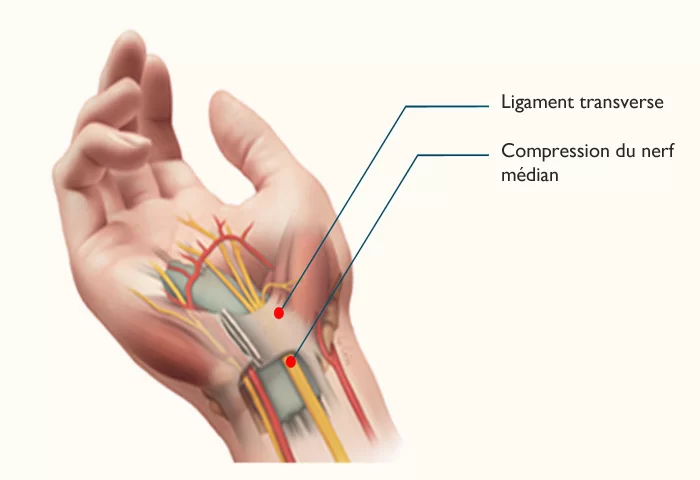
Here are some exercises that can help relieve the symptoms of carpal tunnel syndrome:
Wrist stretches
Wrist flexion stretch: Extend your arm in front of you, palm facing up. With your other hand, gently pull your fingers downwards until you feel a stretch in your forearm.
Wrist extension stretch: Extend your arm in front of you, palm down. With your other hand, gently pull your fingers upwards until you feel a stretch on the top of your forearm.
Muscle strengthening exercises
Wrist flexion with an elastic band: Hold an elastic band in your hand, palms facing upwards. Bend your wrist upwards against the resistance of the band, then return to the starting position.
Wrist extension with an elastic band: Hold the elastic band in your hand, palms down. Bend your wrist downwards against the resistance of the band, then return to the starting position.
Sensory awareness exercises
Use a stress ball or a soft ball to perform gripping and manipulation exercises. This can help improve finger sensitivity and coordination.
Practice touching different textures with your fingers to stimulate the nerves and improve tactile sensitivity.
Neck and shoulder stretches
Carpal tunnel syndrome can sometimes be aggravated by poor posture in the neck and shoulders. Practice neck and shoulder stretches to relieve tension that may be contributing to carpal tunnel symptoms.
Relaxation exercises
Practice relaxation exercises, such as deep breathing or meditation, to reduce stress and muscle tension throughout the body, including the wrists and forearms.
Eye-hand coordination exercises
Practice activities that require precise eye-hand coordination, such as drawing, sewing, or playing board games. This can help improve hand coordination and function.
Be sure to perform these exercises regularly and gently. If you experience increased pain during or after the exercises, stop immediately and consult a healthcare professional. It is also important to consult a healthcare professional before starting any exercise program, especially if you have a history of carpal tunnel syndrome.